4 THE KIDS PRODUCTIONS 4 The Kids Productions Los Angeles — Feature Films
Screening room with velvet seats and a projector beam reaching a glowing bone screen

Film production services — Los Angeles

From first draft to distribution window

Held on screen long enough to be judged

4 THE KIDS PRODUCTIONS offers film production services for feature films, from early movie development through post-production and the planning of a distribution window. Each service answers a practical question a feature raises: what will it cost, who will make it, how will it be finished, and where will it be seen. The services below follow the order a project actually moves, so a filmmaker or partner can see where their project fits.

The bench — before a shoot day

Work that happens before the camera rolls

Development, budgeting, financing and casting decide whether a shoot can start on time and finish on budget. This is where a script becomes a production a crew can actually run.

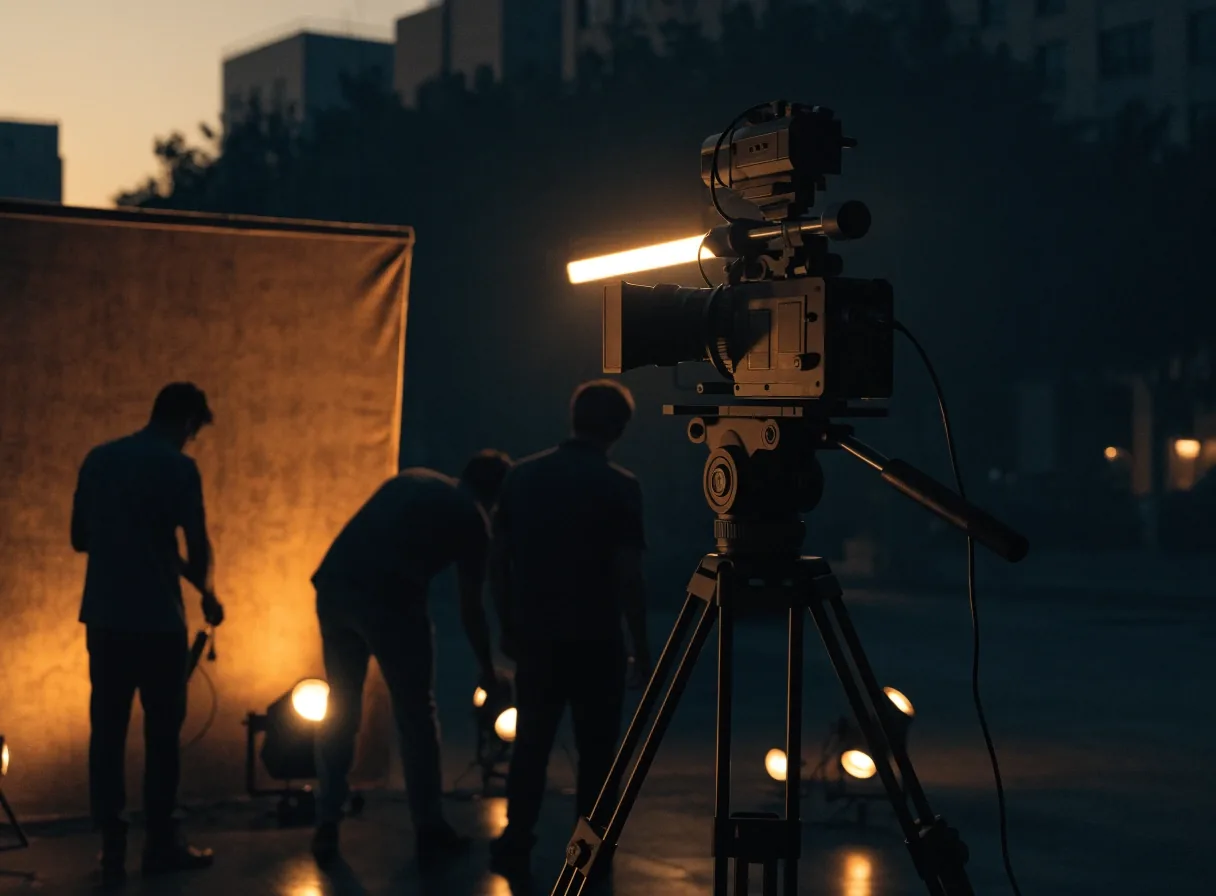
Camera and crew at work on a feature film set under warm practical lights
A set runs on decisions made weeks earlier
Development

Movie development and script evaluation

Development begins with reading the script for structure, character agency, and producibility. We note which scenes carry the story and which carry only cost, and discuss how a revision could strengthen one without losing the other. A development slate needs material that can be budgeted, scheduled, and cast — a stricter test than a good idea. We also check the ending against the opening question, because audiences judge a feature by whether its final act earns the first. A script that passes those tests is ready for the next stage.

Budget & schedule

Budgeting and scheduling

A budget top sheet and a shooting schedule are the two documents every other decision depends on. We build them from the script itself, counting locations, cast size, period elements, and visual effects shots rather than copying figures from a different film. The schedule translates those counts into shooting days, locations, and company moves. When a scene needs a night exterior in rain, the budget and the schedule both have to say so. Honest documents at this stage prevent a production from discovering its real cost in week three.

Financing package

Assembling a financing package

A financing package combines the sources that will pay for the film, and each source brings conditions that affect the production. Equity partners, presales, gap funding, and tax incentives each have their own timelines, approvals, and delivery requirements. We map those conditions against the shoot and post schedules so the film is not redesigned around money that arrives late. The package must also cover post-production and delivery, not only the shoot, because a film that cannot be finished has not been financed. A closed package is a set of signed documents, not a conversation.

Ask about a financing package
Casting & hires

Casting and key hires

Casting is where a script becomes a film, and the market for actors is shaped by availability, schedule, and the audience each name brings. We work with representatives and casting directors to build a list that fits the budget and the intended distribution window. Key hires such as the director of photography, production designer, and editor are chosen for their work on features of comparable scale. A crew that has finished features before brings judgment about turnaround, overtime, and the daily discipline a set runs on. Those hires cost money, and they save money — both facts belong in the budget.

On set

Production management on set

Production management covers the day-out-of-days, location logistics, permits, transportation, and the daily call sheet that tells a crew where to be and when. We staff production with people who have run feature shoots, because a set has a rhythm that paperwork alone cannot create. Location work in Los Angeles and beyond requires permits, insurance, and a respectful plan for the people who live near the shoot. Safety and hours are not negotiable items in that plan. A well-run set is also a better advertisement for the next project than any pitch deck.

Finishing and release

Three stages, one connected schedule

Post-production, sales and the distribution window are planned together. A decision in the edit changes the mix; a decision about platform changes the delivery files.

Post-production suite bench where a film is reviewed before delivery

Foreground — the finish

Post-production supervision

Post-production includes the edit, sound editorial, the mix, the color pass, visual effects finishing, music, and the creation of captions and delivery files. We supervise those stages as one connected schedule rather than as separate favors asked of different vendors. The editor needs a locked picture before the mix can start, and the mix needs a final dialogue track before it can finish. Color and visual effects each need their own review cycle with the director present. A streaming delivery has different technical requirements than a theatrical one, and we plan for both where the distribution window calls for it.

Midground — the market

Sales agency and festival strategy

Once a film is finished, a sales agent represents it to distributors and advises on territory, term, and platform. We prepare the materials that agent needs: a screening file, a festival strategy, a list of territories already placed, and a clean chain of title. A market premiere can be the right first step for a prestige release, while a genre feature may do better with a direct sales effort to the right buyers. The strategy depends on the film, the audience, and the current market, not on a fixed rule. We choose the path that fits the material.

Background — the window

Distribution window planning

A distribution window is the order in which a film reaches theatrical, streaming, and other platforms, and that order shapes marketing and delivery. A theatrical window calls for a DCP, a trailer campaign, and press materials built around the screen. A streaming window calls for platform specifications, key art in multiple sizes, and captions in the languages the platform requires. Planning the window during development means the shoot captures clean dialogue, usable stills, and poster-ready images. A film shot without those assets pays for them later at a worse rate.

Empty night set with a table, chairs and a single practical lamp

How an engagement starts

What a service engagement looks like

An engagement begins with a short inquiry to [email protected] or through the contact page, followed by a reading of the script or the current package. We then reply with a clear statement of what we can do, what stage the project is at, and what documents we need next. Fees, rights, and timelines are discussed in writing before work begins, and no one should assume an agreement from a phone call. That clarity is part of the service. A producer who cannot describe the engagement cannot be trusted to run the production.

4 The Kids Productions

Feature films developed and produced in Los Angeles for theatrical and streaming release — from first draft to distribution window.